
Freelancers and agencies face a common nightmare: completed work sitting in limbo waiting for client approval. Days turn into weeks. Payments stall. New projects can't start. Meanwhile, clients claim they never received the deliverables, or worse-they approved something but now want changes.
The solution is milestone approvals-a structured approach to breaking projects into phases, getting documented sign-off at each stage, and tying approvals to payments. When implemented correctly, milestone approvals eliminate ambiguity, accelerate payments, and protect both you and your clients.
This guide covers everything you need to know about milestone-based project delivery, from defining effective milestones to building approval workflows that actually work.
What Are Project Milestones?
A milestone is a significant checkpoint in a project that marks the completion of a major deliverable or phase. Unlike tasks, which track individual work items, milestones represent meaningful progress points that stakeholders care about.
Milestones vs. Tasks
Tasks answer: "What work needs to be done?"
- Design homepage mockup
- Write product descriptions
- Code user authentication
Milestones answer: "What value is being delivered?"
- Phase 1: Design Complete (homepage, product pages, checkout flow)
- Phase 2: Content Complete (all copy finalized and approved)
- Phase 3: Development Complete (fully functional site ready for testing)
Tasks are internal work management. Milestones are client-facing progress markers.
Why Milestones Matter
For clients:
- Clear understanding of what they're getting
- Defined checkpoints to review progress
- Opportunities to provide feedback before it's too late
- Confidence that the project is proceeding correctly
For freelancers and agencies:
- Natural payment triggers
- Scope boundaries that prevent creep
- Documented approvals that protect against disputes
- Manageable chunks that reduce overwhelm
For projects:
- Structured progress tracking
- Clear success criteria at each phase
- Risk reduction through incremental delivery
- Easier course correction when needed
Defining Effective Milestones
Not all milestones are created equal. Poorly defined milestones create confusion; well-defined milestones drive smooth project execution.
Characteristics of Good Milestones
Specific and Measurable
Bad: "Design phase complete" Good: "Homepage design with responsive mobile layouts, approved by client"
Bad: "Development done" Good: "User authentication system complete: registration, login, password reset, email verification"
Milestones should be concrete enough that completion is obvious. No ambiguity about whether you've reached the milestone.
Valuable Standalone
Each milestone should deliver tangible value. If the project ended at any milestone, the client should have something useful.
Bad sequence:
- Milestone 1: Research complete
- Milestone 2: Planning complete
- Milestone 3: Actual work begins
Good sequence:
- Milestone 1: Brand identity (logo, colors, typography)
- Milestone 2: Website design (homepage + 3 key pages)
- Milestone 3: Development (functional website)
Clients can use the brand identity even if the website never gets built. Each phase delivers standalone value.
Appropriately Sized
Too small: Administrative overhead outweighs benefits. Clients get approval fatigue. Progress feels fragmented.
Too large: Feedback comes too late. Risks compound. Payments are delayed. Changes become expensive.
For most projects, 3-6 milestones hit the sweet spot. Each milestone represents 2-4 weeks of work, depending on project scope.
Logically Sequenced
Milestones should follow natural project flow. Each milestone builds on the previous one.
Logical sequence for a website project:
- Discovery & Strategy (requirements, sitemap, wireframes)
- Visual Design (look and feel, key page designs)
- Content Creation (copy, images, media)
- Development (functional build)
- Testing & Launch (QA, deployment, training)
Each phase naturally follows the previous one. Clients understand the progression.
Milestone Templates by Project Type
Web Design Project:
- Discovery & Wireframes
- Visual Design Concepts
- Final Design Package
- Development
- Launch & Handoff
Brand Identity Project:
- Discovery & Research
- Logo Concepts
- Final Logo & Guidelines
- Brand Collateral
- Asset Delivery
Content Marketing Project:
- Strategy & Editorial Calendar
- First Content Batch (5 articles)
- Second Content Batch (5 articles)
- Third Content Batch (5 articles)
- Performance Review & Optimization
Software Development Project:
- Requirements & Architecture
- Core Functionality
- Additional Features
- Testing & Bug Fixes
- Deployment & Documentation
Adapt these templates to your specific service offerings.
Building Approval Workflows
Milestones only work when approvals are documented. Verbal "looks good" or casual email confirmations create disputes. You need formal approval workflows.
Elements of an Approval Workflow
Submission Notification When a milestone is ready for review, clients receive a clear notification. This isn't a casual message-it's a formal request that signals the deliverable is complete and requires their attention.
Review Period Clients need reasonable time to review. Specify this upfront: "Please review within 5 business days." This prevents indefinite delays while giving adequate review time.
Feedback Collection Provide a structured way for clients to submit feedback. Comments directly on deliverables are better than separate emails. Organize feedback by specific items, not general impressions.
Revision Process When feedback requires changes, document what's being revised and why. Track revisions against the original scope to identify scope creep.
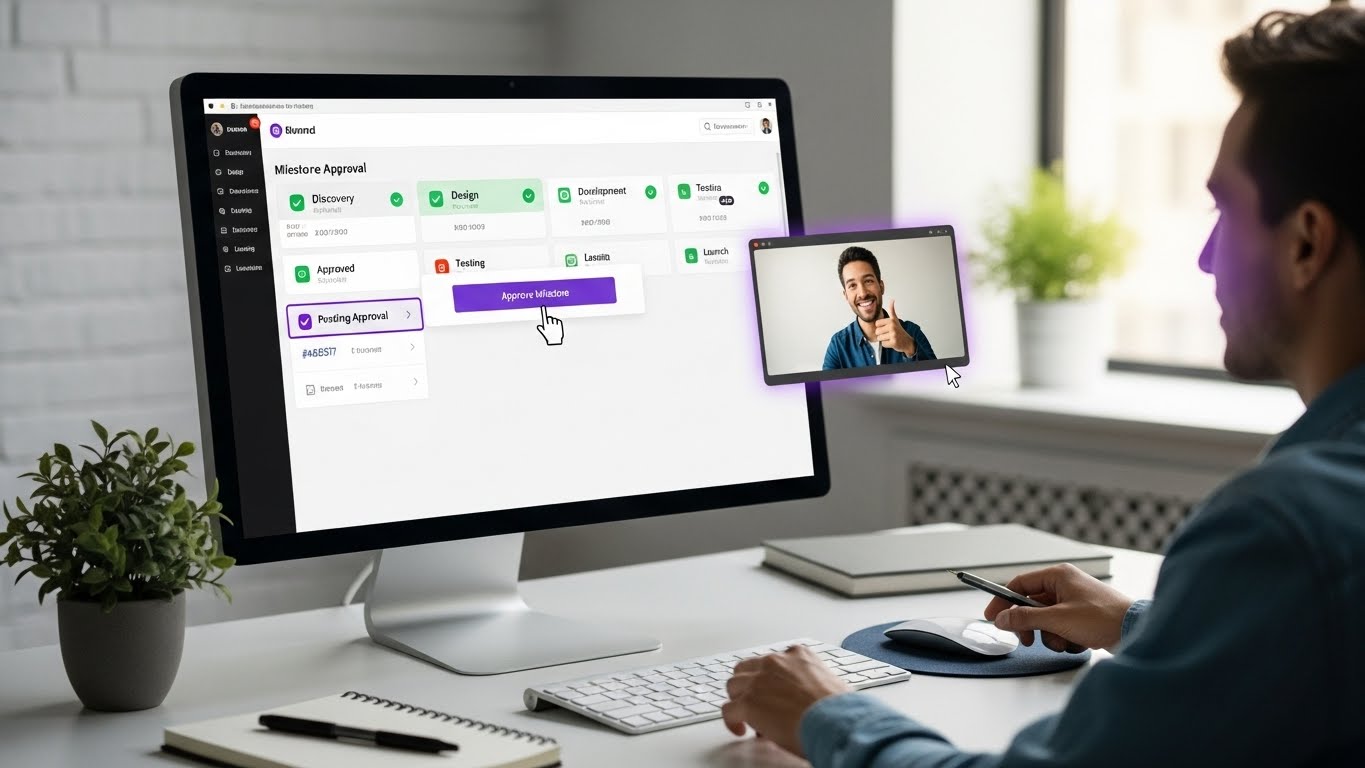
Formal Approval The approval itself should be a deliberate action-clicking an "Approve" button, not just sending an email. This creates an undeniable record.
Approval Documentation Record who approved, when they approved, and exactly what was approved. This audit trail protects both parties.
Setting Up Approval Workflows in Protawk
Protawk includes native milestone approval functionality. Here's how to set it up:
Step 1: Create Milestone In your project, add a milestone with:
- Clear title (e.g., "Phase 2: Visual Design")
- Description of what's included
- Associated deliverables and tasks
- Due date
Step 2: Add Deliverables Attach the specific items clients will review:
- Design files
- Documents
- Prototypes
- Any assets being delivered
Step 3: Request Approval When the milestone is complete:
- Mark milestone as "Ready for Review"
- Client receives notification in their portal
- They can view all associated deliverables
Step 4: Collect Feedback Clients can:
- Comment on specific deliverables
- Request changes
- Ask clarifying questions
- All within the platform
Step 5: Process Revisions If changes are needed:
- Document revision requests
- Track whether they're within scope
- Implement changes
- Resubmit for review
Step 6: Receive Approval When clients approve:
- They click the formal "Approve Milestone" button
- System records approval timestamp
- You receive notification
- Milestone status updates automatically
Step 7: Trigger Payment With documented approval:
- Generate invoice for milestone amount
- Payment terms begin
- Clear record exists if disputes arise
Handling Revision Requests
Revisions are inevitable. Clients will have feedback; changes will be necessary. The key is managing revisions without destroying your profitability or project timeline.
Setting Revision Expectations Upfront
Before projects begin, establish clear revision policies:
Included Revisions "Two rounds of revisions are included per milestone."
Revision Scope "Revisions include adjustments to existing work. New features or significant changes require a change order."
Revision Timing "All revision requests must be submitted within 5 business days of deliverable submission. Consolidated feedback is preferred over multiple rounds of small changes."
Additional Revision Costs "Additional revision rounds beyond the included two are billed at $X per round."
Document these policies in your proposal or contract. When revision requests come in, you have clear guidelines to reference.
Distinguishing Revisions from Scope Creep
Revisions adjust existing work:
- "Can we try a different shade of blue?"
- "The headline needs to be stronger"
- "Move the call-to-action button higher"
Scope creep adds new work:
- "Can we also add a contact page?"
- "Let's include a blog section"
- "We need this in Spanish too"
The line isn't always clear. When uncertain, ask: "Was this part of the original scope?" If not, it's scope creep, regardless of how small it seems.
Responding to Scope Creep
When clients request out-of-scope additions, respond professionally:
"That's a great idea! Adding [feature] wasn't part of our original scope, but I'd be happy to include it. This would add approximately [time] to the timeline and [cost] to the budget. Want me to prepare a formal change order?"
This positions you as helpful while protecting your boundaries. Clients understand that additional work has additional costs.
Documenting Everything
For every revision:
- What was requested
- Who requested it
- When it was requested
- Whether it's within scope
- When it was completed
- Any discussions about scope
This documentation protects you in disputes and helps identify clients who consistently exceed revision allocations.
Tying Payments to Milestones
The financial aspect is why milestones matter most to freelancers. Connecting payments to deliverable approvals creates predictable cash flow and reduces payment chasing.
Payment Structure Options
Equal Payments Divide total project cost by number of milestones. If a $10,000 project has 5 milestones, each milestone is $2,000.
Simple to understand and implement. Works well when milestone effort is roughly equal.
Weighted Payments Assign payment amounts based on milestone effort or value. Development might be worth more than discovery.
More complex but fairer when milestones require significantly different effort.
Deposit + Milestones Collect an upfront deposit (25-50%), then divide remaining amount across milestones.
Reduces risk by ensuring some payment before work begins. Common for larger projects.
Deposit + Final Payment Collect deposit upfront, remainder upon project completion. Use milestones for progress tracking without payment triggers.
Simpler administratively but concentrates payment risk at the end.
Payment Timing
When should milestone payments be due?
Due Upon Approval Payment is due immediately when client approves milestone. Net-0 or Net-7 terms.
Fastest cash flow. Appropriate for ongoing relationships with established trust.
Due Within Standard Terms Payment is due within Net-15 or Net-30 of approval. Standard business practice.
Gives clients reasonable time while maintaining connection to specific deliverables.
Due Before Next Phase Work on next milestone doesn't begin until previous milestone is paid. Creates natural leverage.
Protects against clients who approve work but delay payment. May slow project progress.
Handling Payment Delays
Despite your best efforts, payment delays happen. Strategies for managing them:
Clear Terms in Contracts Specify payment terms, late fees, and consequences for non-payment before work begins.
Automatic Reminders Set up automatic invoice reminders so you don't have to personally chase payments.
Work Stoppage Clause Include language allowing you to pause work if payments fall behind. Exercise this clause professionally when needed.
Milestone Dependency Structure contracts so next-phase approval requires previous payment. Clients can't approve Milestone 3 until Milestone 2 is paid.
Common Milestone Mistakes
Learn from others' errors:
Mistake 1: Milestones Without Clear Deliverables
Vague milestones like "Phase 1 complete" invite disagreement about what's included. Define specific deliverables for each milestone.
Mistake 2: Allowing Informal Approvals
"Looks good!" in an email isn't proper approval. Require formal approval through your project management system to create an undeniable record.
Mistake 3: Continuing Without Approval
Don't start Phase 2 while Phase 1 approval is pending. This creates confusion and reduces your leverage if disputes arise.
Mistake 4: Ignoring Revision Limits
If you've set two revision rounds, enforce it. Allowing endless revisions for some clients trains everyone to expect the same.
Mistake 5: Delayed Invoicing
Send invoices immediately upon approval. Delayed invoicing leads to delayed payment and looks unprofessional.
Mistake 6: No Milestone Buffer
Things take longer than expected. Build buffer time into milestone deadlines. Under-promising and over-delivering beats the reverse.
Mistake 7: Client Approval Bottlenecks
If client feedback takes forever, your project stalls. Set clear review deadlines and escalation procedures for unresponsive clients.
Milestone Communication Best Practices
How you communicate around milestones affects client perception and project smoothness.
Before the Milestone
Set Expectations Remind clients when milestones are approaching. "We're on track to submit Phase 2 for your review next Tuesday."
Preview What's Coming Brief clients on what they'll receive. "You'll receive the complete homepage design along with mobile responsive versions and a style guide."
Prepare for Review Organize deliverables so review is easy. Messy submissions create messy feedback.
When Submitting
Clear Presentation Present deliverables professionally. Context and organization matter.
Specific Questions If you need particular feedback, ask clearly. "Please pay special attention to the call-to-action placement and let us know if it feels prominent enough."
Review Instructions Tell clients exactly what you need. "Please review and provide all feedback by Friday. We'll then make revisions and resubmit for final approval."
Deadline Reminder Reiterate the review timeline. "As per our agreement, please provide feedback within 5 business days."
During Review
Available for Questions Be responsive to client questions during review. Quick clarifications prevent delays.
Don't Hover Give clients space to review. Constant check-ins feel pushy.
Document Discussions Any verbal discussions should be followed up in writing to create a record.
After Approval
Confirm Receipt Acknowledge the approval. "Thank you for approving Phase 2! We'll begin Phase 3 on Monday."
Invoice Promptly Send the invoice immediately if payment is tied to this milestone.
Look Forward Preview what's next. "In Phase 3, we'll focus on..."
Building Client Trust Through Milestones
Milestone-based delivery isn't just operational-it builds relationships.
Transparency Creates Confidence
Clients who see structured progress trust you more than those left wondering what's happening. Each milestone approval reinforces that their investment is yielding results.
Predictability Reduces Anxiety
When clients know exactly what to expect and when, project anxiety decreases. Defined milestones eliminate the "are we there yet?" questions.
Documented Progress Tells a Story
Over time, your milestone history creates a narrative of successful delivery. This record helps during project reviews and supports testimonials and case studies.
Professional Process Justifies Premium Rates
Amateur freelancers send files and ask "does this look good?" Professionals have structured approval workflows. The difference justifies higher rates.
Tools for Milestone Management
The right tools make milestone management effortless.
Project Management Platform Requirements
When choosing a project management system for milestone-based work, ensure it supports:
Milestone as a Distinct Entity Milestones should be separate from tasks, with their own status, dates, and deliverables.
Approval Workflows Built-in approval functionality with documented sign-off, not just status changes.
Client Access Clients should access milestones through a client portal without seeing internal work.
Deliverable Attachment Files and assets should attach directly to milestones for organized review.
Payment Integration Ideally, approved milestones trigger invoices automatically.
Audit Trail Complete history of who approved what and when.
Why Protawk Works for Milestone-Based Delivery
Protawk was designed with freelancer and agency workflows in mind:
Native Milestone Support: Milestones are first-class entities, not hacked-together task features.
Client Portal: Clients see professional milestone views without internal complexity.
Approval Workflows: Built-in approval with timestamps and documentation.
Payment Tracking: Connect milestones to payment status.
Deliverable Management: Attach any file type to milestones for organized review.
Multiple Views: See milestones in Gantt, Kanban, or Calendar view depending on your needs.
Getting Started with Milestone Approvals
Ready to implement milestone-based delivery? Here's your action plan:
Step 1: Map Your Service to Milestones
Take your most common project type. What are the natural phases? What deliverables mark each phase? Draft a milestone template.
Step 2: Define Your Revision Policy
How many revisions are included? What counts as a revision vs. scope creep? What do additional revisions cost? Document this clearly.
Step 3: Create Payment Structure
How will project payments align with milestones? Equal splits? Weighted by effort? Deposit plus milestones? Decide your default structure.
Step 4: Set Up Your System
Configure your project management platform for milestone tracking. Create templates so new projects start with proper structure.
Step 5: Update Your Proposals
Modify your proposal template to include milestone definitions, revision policies, and payment terms. Set expectations before work begins.
Step 6: Communicate to Current Clients
For existing clients, introduce your new milestone-based approach. Position it as an improvement that benefits them through better visibility and structured delivery.
Step 7: Iterate and Improve
After a few projects, review what's working. Are milestones sized appropriately? Are clients confused by anything? Refine your approach based on real experience.
The Result: Professional, Profitable Client Work
Milestone approvals transform chaotic client work into predictable, profitable operations. When implemented correctly, you'll experience:
Faster Payments: Approved milestones trigger immediate invoicing Fewer Disputes: Documented approvals eliminate "I never approved that" Clearer Scope: Milestones define what's included at each phase Better Relationships: Clients appreciate structure and transparency Higher Rates: Professional process justifies premium pricing Less Stress: Structured delivery reduces project anxiety
The investment in setting up milestone workflows pays dividends across every project.
Start Using Milestone Approvals Today
Protawk makes milestone-based delivery simple with built-in approval workflows, client portal access, and payment tracking. Stop chasing approvals through email and start using systems designed for professional client work.
Set up your first milestone-based project today and experience the difference structured delivery makes.
Professional client work requires professional tools. Protawk delivers the milestone workflows freelancers and agencies actually need.